What is calabaza en tacha?
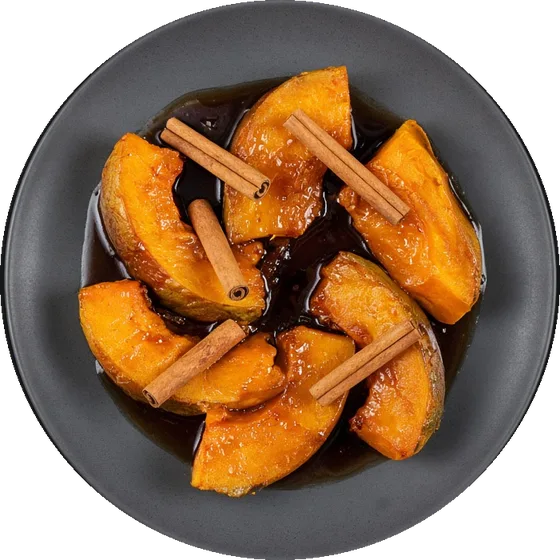
Calabaza en tacha is a Mexican sweet of squash slowly simmered in a piloncillo (raw cane sugar) syrup with cinnamon and other spices. It is a classic on Day of the Dead altars.[1][2][4]
What is in candied pumpkin?
- Calabaza de Castilla squash, yellow, orange or green
- Piloncillo and water
- Cinnamon, clove, allspice or anise
- Depending on the region: sugarcane, guava or tejocote
- To serve, optionally: milk
Where does candied pumpkin come from?
The name comes from tachos, large copper cauldrons in which cane juice was boiled to make piloncillo. According to a UNAM guide, squash was cooked in the leftover molasses in those vessels. As researcher Edgar Salgado puts it: "cook the squash in a tacho and it becomes calabaza en tacha".[1][2][3]
Sugar production took off in the Morelos and Puebla valleys in the 16th century, after the Spanish arrived. According to Mexico News Daily, squash was cooked with maguey sap before that.[3]
Salgado says there are historical records of it being eaten, but the first recipes only appear in the 20th century, when interest in defining Mexican cuisine grew after the Revolution.[2]
Types of candied pumpkin
Puebla: with fig leaves and tejocotes. Michoacán: with chunks of sugarcane. Oaxaca: with guavas.[3]
In some places the squash is soaked in lime water so it holds its shape. Salgado notes it is not the same as dulce de calabaza: for tacha the squash is pierced and cooked whole in the syrup, in a copper pot, for an hour or more.[3][2]
Other names
Calabaza de Castilla is said to be named after Queen Isabella of Castile, who supposedly liked it so much she gave it her name. It is an anecdote, not a documented fact. Its scientific name is Cucurbita moschata.[4][1]
When is candied pumpkin eaten?
During the Day of the Dead season, when the squash harvest is at its best. According to Salgado, on the altar squash stands for "the abundance of the land".[2][1]
It is eaten cold or warm, and some people have it for breakfast with milk.[1][3]
Did you know?
Done right, the squash turns glossy and firm. Chef Josué Martínez says it "looks like a kind of ceramic".[2]
Mexico is the largest producer of this type of squash: in 2020 it grew more than 23,000 tons of calabaza de Castilla.[4]
Frequently asked questions
What is calabaza en tacha?
Calabaza en tacha is a Mexican sweet of squash slowly simmered in a piloncillo (raw cane sugar) syrup with cinnamon and other spices. It is a classic on Day of the Dead altars.
What are the ingredients of candied pumpkin?
Calabaza de Castilla squash, yellow, orange or green; Piloncillo and water; Cinnamon, clove, allspice or anise; Depending on the region: sugarcane, guava or tejocote; To serve, optionally: milk.
Where is candied pumpkin from?
The name comes from tachos, large copper cauldrons in which cane juice was boiled to make piloncillo. According to a UNAM guide, squash was cooked in the leftover molasses in those vessels. As researcher Edgar Salgado puts it: "cook the squash in a tacho and it becomes calabaza en tacha".
When is candied pumpkin eaten?
During the Day of the Dead season, when the squash harvest is at its best. According to Salgado, on the altar squash stands for "the abundance of the land".
Sources
- UNAM, Dirección General de Personal: Calabaza en tacha
- UnoTV: Calabaza en tacha, conoce la historia de este dulce «que sabe a Día de Muertos»
- Mexico News Daily: Taste of Mexico: Calabaza en tacha
- México Desconocido: Calabaza de Castilla, fruto mesoamericano esencial en la ofrenda del Día de Muertos
Researched and checked on October 14, 2026. Legends and disputed claims are marked as such in the text. How we work
Other dishes
What is pozole? · What is pan de muerto? · What is a tamale? · What is mole poblano? · What is a burrito? · What is champurrado? · What is atole? · What is Mexican hot chocolate? · What is Mexican Christmas apple salad? · What is Mexican Christmas ponche? · all