What is ropa vieja?
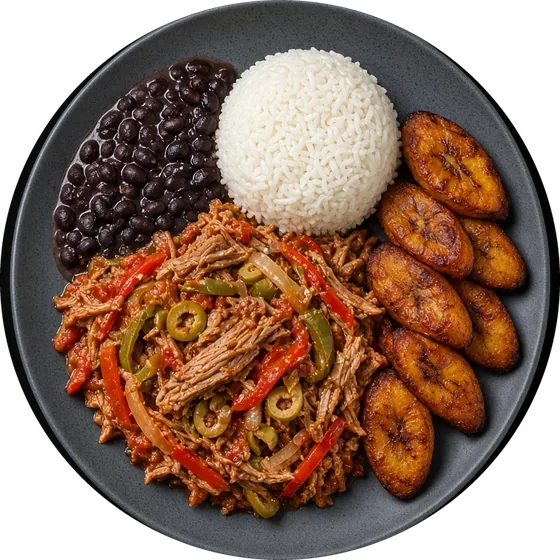
Ropa vieja is a stew of shredded beef with tomato, onion and peppers, typical of Cuba, served with white rice, black beans and fried plantains. It came to Cuba from the Canary Islands, where it is made from leftover puchero stew and includes chickpeas.[1][3]
What is in ropa vieja (shredded beef)?
- Shredded beef, often flank
- Tomato, onion and peppers
- Cumin and bay leaf
- In some recipes: olives and capers
- To serve: white rice, black beans and fried plantains
- Canary Islands version: meats from the puchero (pork, chicken and beef), chickpeas and fried potatoes
Where does ropa vieja (shredded beef) come from?
In the Canary Islands it began as a leftovers dish: the meat from the puchero is shredded, sautéed and mixed with the stew's chickpeas, then served over fried potatoes. It probably reached Cuba with the tens of thousands of Canary Island emigrants of the 19th century.[1]
The oldest known Cuban record is an 1857 cookbook, "Nuevo manual del cocinero cubano y español". In Cuba the potatoes were dropped, since rice was the island's starch, and so were the chickpeas.[1]
Further back, the origin is uncertain. Some say it reached the Canaries from mainland Spain, where it was common among Sephardic Jews, and that in medieval Spain it was a jumble of leftover meat and legumes.[2]
Types of ropa vieja (shredded beef)
Canary Islands: with pork, chicken and beef, chickpeas and fried potatoes.[1]
Mainland Spain: in Madrid and Castilla-La Mancha it is made with leftovers of cocido madrileño or any chickpea stew.[4][2]
Argentina: leftover puchero or asado with vegetables, served as a cold salad, sometimes with mayonnaise. In Colombia and Venezuela scrambled eggs are added.[2]
Other names
"Ropa vieja" means "old clothes". English uses the Spanish name.[3][1]
When is ropa vieja (shredded beef) eaten?
In Cuba it is eaten at home, in traditional restaurants and paladares, and is common at family gatherings. But beef is tightly restricted by the Cuban government, so today it is hard to find in homes.[3][1]
In the Canary Islands it is sold in markets, at take-out counters and in guachinches, casual eateries at local wineries.[1]
Did you know?
A Canary Island legend tells of a very poor man who, with nothing to feed his children, cooked his old clothes as if they were meat, and his love (or his prayers, in another version) turned them into stew. It is only a legend.[1][3]
Frequently asked questions
What is ropa vieja?
Ropa vieja is a stew of shredded beef with tomato, onion and peppers, typical of Cuba, served with white rice, black beans and fried plantains. It came to Cuba from the Canary Islands, where it is made from leftover puchero stew and includes chickpeas.
What are the ingredients of ropa vieja (shredded beef)?
Shredded beef, often flank; Tomato, onion and peppers; Cumin and bay leaf; In some recipes: olives and capers; To serve: white rice, black beans and fried plantains; Canary Islands version: meats from the puchero (pork, chicken and beef), chickpeas and fried potatoes.
Where is ropa vieja (shredded beef) from?
In the Canary Islands it began as a leftovers dish: the meat from the puchero is shredded, sautéed and mixed with the stew's chickpeas, then served over fried potatoes. It probably reached Cuba with the tens of thousands of Canary Island emigrants of the 19th century.
When is ropa vieja (shredded beef) eaten?
In Cuba it is eaten at home, in traditional restaurants and paladares, and is common at family gatherings. But beef is tightly restricted by the Cuban government, so today it is hard to find in homes.
Sources
- Saveur (Kathleen Squires): Spanish Conquest
- Conclusión (Daniel Castellanos): Historias al plato: «A río revuelto»
- Billiken: Ropa vieja, un símbolo de la gastronomía cubana
- Directo al Paladar: Receta de ropa vieja del cocido madrileño
Researched and checked on October 14, 2026. Legends and disputed claims are marked as such in the text. How we work
Other dishes
What is a pupusa? · What is pernil? · What is rice and black beans? · What is arroz con gandules? · What are fried sweet plantains? · What are tostones? · What is mofongo? · What is pozole? · What is pan de muerto? · What is a tamale? · all