What is onigiri?
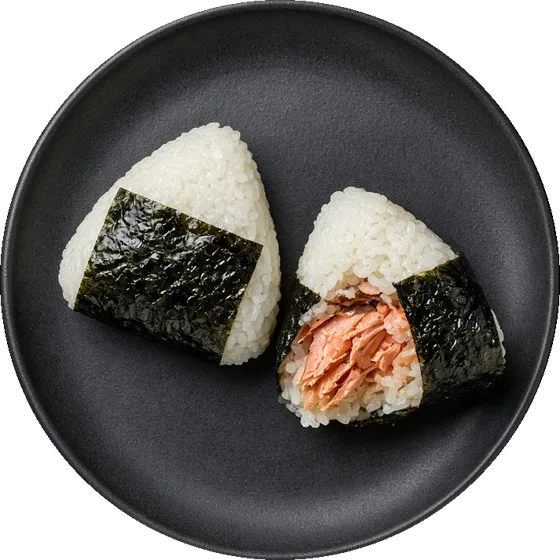
Onigiri is a ball or triangle of white rice pressed by hand, often with a filling and wrapped in nori seaweed. It is one of Japan's most common snacks.[1][2]
What is in rice ball?
- Short-grain white rice
- Salt: traditionally the hands are salted before shaping
- Nori seaweed
- Classic fillings: umeboshi (pickled plum), grilled salmon, salted kelp and bonito flakes
- Modern fillings: tuna mayonnaise, egg, fried chicken
- Furikake on top
Where does rice ball come from?
The oldest known onigiri is more than 2,000 years old: triangular lumps of carbonized rice found at the Sugitani Chanobatake site in Ishikawa, from the mid-Yayoi period. That rice was cooked in a wrapping, and experts disagree on whether it was portable food or a ritual offering.[1][2]
The first written record is in the Hitachi no kuni fudoki, from around 721, which mentions people carrying hand-shaped rice, nigiri ii. In the Heian period (794-1185), rice balls called tonjiki were handed out at court and appear in The Tale of Genji.[2][1][4]
In the Kamakura period (1192-1333) it became a military ration, already with umeboshi. It is said that Hojo Masako encouraged the Kamakura samurai with umeboshi omusubi during the Jokyu War. By the Edo period it was everyone's food: Hiroshige drew travelers eating it in The Fifty-three Stations of the Tokaido (1833-34).[1][4]
Types of rice ball
Shapes: the triangle is now the most common because it is stable and suits mass production. Kyoto and Osaka made it bale-shaped (tawara); Edo, round or triangular. Okinawa has a sandwich-style one with pork and egg.[2]
By region: coastal areas fill it with seafood or seaweed; inland and mountain areas, with wild plants, miso or pickles.[2]
Convenience-store onigiri: 7-Eleven began researching it in 1976 and launched it in 1978. Tuna mayonnaise, from 1983, boosted sales. Its wrapper has a film that keeps the nori apart from the rice so the seaweed stays crisp.[3][4]
Other names
"Onigiri" comes from nigiru, "to squeeze by hand"; it used to be called nigiri ii and nigiri meshi. The other name, omusubi, spread in the Edo period and comes from the verb "to bind". According to sources of the time, at first only women used it.[1][2][4]
When is rice ball eaten?
It is eaten at any time as a snack on the go: convenience stores and supermarkets have refrigerated cases just for it, and it also goes in bento boxes and school lunches. In 1885 it was among the first foods sold on Japan's first railway line.[1]
After the 1995 Great Hanshin-Awaji Earthquake, onigiri was the main food volunteers handed out to evacuees. Since 2000, January 17, the date of the earthquake, has been Omusubi Day.[2]
Did you know?
In 2024 the Oxford English Dictionary added the word "onigiri".[2]
According to Keio University, convenience-store onigiri may account for as much as 30% of the nori consumed in Japan.[4]
Frequently asked questions
What is onigiri?
Onigiri is a ball or triangle of white rice pressed by hand, often with a filling and wrapped in nori seaweed. It is one of Japan's most common snacks.
What are the ingredients of rice ball?
Short-grain white rice; Salt: traditionally the hands are salted before shaping; Nori seaweed; Classic fillings: umeboshi (pickled plum), grilled salmon, salted kelp and bonito flakes; Modern fillings: tuna mayonnaise, egg, fried chicken; Furikake on top.
Where is rice ball from?
The oldest known onigiri is more than 2,000 years old: triangular lumps of carbonized rice found at the Sugitani Chanobatake site in Ishikawa, from the mid-Yayoi period. That rice was cooked in a wrapping, and experts disagree on whether it was portable food or a ritual offering.
When is rice ball eaten?
It is eaten at any time as a snack on the go: convenience stores and supermarkets have refrigerated cases just for it, and it also goes in bento boxes and school lunches. In 1885 it was among the first foods sold on Japan's first railway line.
Sources
- Encyclopaedia Britannica: Onigiri
- Nippon.com: Onigiri: The Evolving Face of Japan's Beloved Rice Ball
- Nippon.com: "Onigiri" Rice Balls: Kings of the Convenience Store
- Universidad Keio, Mita Hyoron: Onigiri
Researched and checked on October 14, 2026. Legends and disputed claims are marked as such in the text. How we work
Other dishes
What is curry? · What is ramen? · What is a bento? · What is oden? · What is a dumpling (jiaozi)? · What is tempura? · What is fried rice (arroz chaufa)? · What is pozole? · What is pan de muerto? · What is a tamale? · all