What is curry?
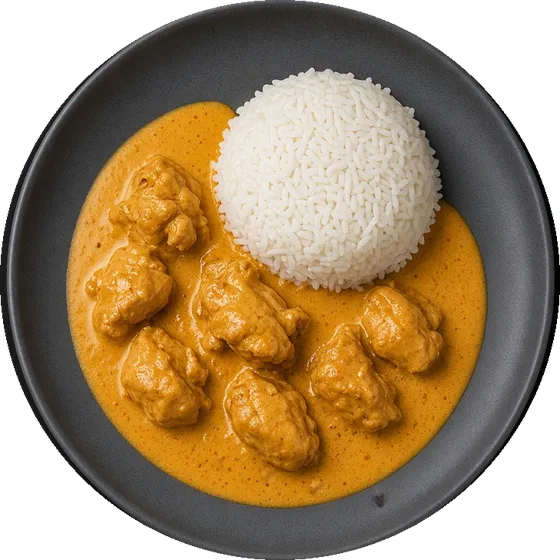
Curry is the name Europeans gave to India's spiced, sauce-based stews eaten with rice. Today it covers very different dishes in India, the United Kingdom, Southeast Asia and Japan.[3][4][1][2]
What is in curry?
- A spiced sauce
- Meat or poultry
- Spices in a typical curry powder: turmeric, coriander, cumin and fenugreek
- Other ancient spices: mustard, cumin and fennel
- Chili, which reached India from the Americas
- Rice on the side
Where does curry come from?
Its roots go back to the Indus Valley civilization: according to Business Standard, by 2600 BCE the Harappans were already blending spices such as mustard, cumin and fennel. Similar dishes appear in Indian texts from the 4th century BCE, such as the Arthashastra.[1]
The word comes from Tamil kari, but its meaning is disputed: it has been translated as "black", "to season", "biting", "spiced sauce" or "relish for rice". The Portuguese, who reached India in 1498, adapted it as caril; the Oxford English Dictionary also links it to Kannada karil. In the 18th century, as the British East India Company rose, caril became curry.[1][3][2][4]
Kari originally named one kind of broth-like relish for rice in South India; Europeans applied the word to many different spiced dishes.[4][3]
Types of curry
Japan: kare raisu (curry rice) arrived with the craze for Western food in the Meiji era, from 1868, and became a staple of navy and army canteens.[2][3]
United Kingdom: curry powder was being advertised by the 1820s, and in 1861 Isabella Beeton published a recipe using it. In 2001 Foreign Secretary Robin Cook called chicken tikka masala Britain's national dish.[1][2]
Southeast Asia: Thailand and Malaysia adapted Indian spices into their own curries.[1]
Caribbean and Indian Ocean: after slavery was abolished in 1833, the British sent about 1.5 million Indian laborers to places such as Mauritius, Guyana and the Caribbean, and curry traveled with them.[1][2]
When is curry eaten?
It is everyday food in many countries. In Japan it was long a dish of military canteens, and the United Kingdom holds a National Curry Week every year.[2][3]
Did you know?
The UK's first curry house, the Hindoostane Coffee House, was opened by Sake Dean Mahomed in Westminster, London, in 1810.[1]
In 1563 the Portuguese physician Garcia de Orta wrote that in India they made dishes of meat and fowl "which they call caril".[4]
Frequently asked questions
What is curry?
Curry is the name Europeans gave to India's spiced, sauce-based stews eaten with rice. Today it covers very different dishes in India, the United Kingdom, Southeast Asia and Japan.
What are the ingredients of curry?
A spiced sauce; Meat or poultry; Spices in a typical curry powder: turmeric, coriander, cumin and fenugreek; Other ancient spices: mustard, cumin and fennel; Chili, which reached India from the Americas; Rice on the side.
Where is curry from?
Its roots go back to the Indus Valley civilization: according to Business Standard, by 2600 BCE the Harappans were already blending spices such as mustard, cumin and fennel. Similar dishes appear in Indian texts from the 4th century BCE, such as the Arthashastra.
When is curry eaten?
It is everyday food in many countries. In Japan it was long a dish of military canteens, and the United Kingdom holds a National Curry Week every year.
Sources
- Business Standard (Kumar Abishek): The curry conquest: A global journey of cultural significance, creativity
- The Takeout (Michael Snyder): What We Know As "Curry" Has A Long And Curious History
- USC Dornsife, Scribe (Audrey Chu): Curries Around the World
- Language Hat (cita del Oxford English Dictionary y de Hobson-Jobson): Curry
Researched and checked on October 14, 2026. Legends and disputed claims are marked as such in the text. How we work
Other dishes
What is ramen? · What is a bento? · What is onigiri? · What is oden? · What is a dumpling (jiaozi)? · What is tempura? · What is fried rice (arroz chaufa)? · What is pozole? · What is pan de muerto? · What is a tamale? · all